AI* for Leaders (Part 3)

a real conversation
free from projection
and ego-flexing
is a special gift

most do not talk to listen;
they talk to be heard

self-awareness, selflessness,
and a real desire to listen
are required for mutually authentic
and honest exchange

By: yung pueblo, From: “clarity and connection”, Kansas City: Andrews McMeel Publishing, 2021, page 32.

Leaders who listen and who engage in conversation in the way described by yung pueblo have cultivated a quality of character that is impossible to “fake” because it is felt on a soulful level.

Consider – does your leadership genuinely express itself most from a desire to be heard or from a desire to listen? How do you know which is needed “in the moment”?

By extension, what practices support you in cultivating a “ mutually authentic and honest exchange” with the people who matter most in your work and life?

*AI = Art Influence

AI* for Leaders (Part 2)

This above all – to thine own self be true,

And it must follow, as the night the day,

Thou canst not then be false to any man.

– From Hamlet, Act I, Scene 3 byWilliam Shakespeare

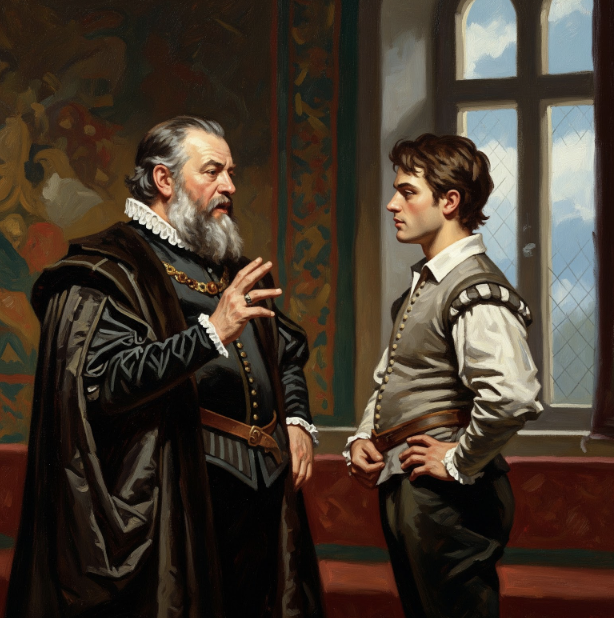
This advice is offered (from father to son) in the middle of a play that grapples with illusion and reality. On the surface, it sounds good… being honest with yourself imbues you with integrity that should be naturally extended to others.

And yet, our inner truths are often subjective, and if we confuse our perspective with our sense of integrity, we may well “become false” to others and to the world around us.

What are the inner subjective truths within your leadership at this time? In turn, how do you allow for the same inner subjective truths in others? 

How is this balance (perhaps?) a deeper expression of integrity?

*AI = Art Influence

AI* for Leaders (Part 1)

Three Things to Remember (by Mary Oliver)

As long as you’re dancing, you can

break the rules.

Sometimes breaking the rules is just

extending the rules.

Sometimes there are no rules.

– From A Thousand Mornings, New York: Penguin, 2013, page 19.

Mary Oliver’s poem invites leaders to consider the rules or constraints (implicit or explicit) that might be holding them back and suggests that the way forward may involve greater connection, creativity, and flow.

What is your ability to “dance with it” at this time?

*AI = Art Influence